79-Year-Old Retired Village Herbalist Leaks a Simple African Herbal Ritual That Eases Chronic Back and Lumbar Pain From the Root Up (Without Painkillers, Physiotherapy Bills, or a Single Exercise Machine)

Living with chronic back pain can sometimes feel like a prison sentence nobody else can see.
You go to work. You smile and deliver.
And nobody in that room knows that you took two ibuprofen before you left the house just to make it through the morning.
Nobody knows about the way you shift in your chair every twenty minutes — not out of restlessness, but out of desperation — searching for the one position that doesn't hurt.
Nobody knows because you don't tell them.
Because a man who can't manage his own body is not the image you want anyone to have of you.
You carry it alone.
One month.
Six months.
One year. Two years. Three years… and somewhere along the way, you stopped counting.
You just accepted it.
But deep down, you already know this is not how it is supposed to be.
Because late at night, when the house is quiet and the ibuprofen has worn off, the real thoughts come:
"What if this is just my life now?"
"What if I am one of those people who just manages pain forever?"
"What if my body is broken and nobody — not the hospital, not the physiotherapist, not the supplements — can actually fix it?"
I lived inside those thoughts for three years.
It was a Saturday morning. My eight-year-old son came to the sitting room bouncing a football.
"Dad. Come and play."
I stood up from the sofa.
And my back said no.
Not a gentle warning. Not a suggestion to take it easy.
A sharp, immediate, sit-back-down no.
My son looked at me. I looked at him.
"Not today. Maybe tomorrow."
That was the third time in two weeks I had said those words to my own child.
I sat back down on that sofa.
Shame.
Not just pain. Not just frustration.
The shame of a man whose body is failing the people who depend on him. Who shows up for work. Who shows up for clients. Who cannot show up for his eight-year-old son and a football in the compound.
That was the day I stopped managing.
And started looking for something that actually goes to the root.
My name is Emeka.

I'm a 42-year-old HR manager from Port Harcourt. Nine hours a day at a desk. Father of two. Not a doctor. Not a herbalist. Not a health expert.
Just a man who was tired of hurting and found something that actually helped.
How Three Years of Ibuprofen Nearly Became My Permanent Address
Month one became month six.
I went to the hospital. They said musculoskeletal strain. They gave me ibuprofen and a referral to physiotherapy.
I attended. Four sessions. It helped — while I was there.
But at ₦15,000 per session, I could not keep going. Life does not pause for your spine.
So I stopped. And within two weeks, the pain came back.
Same pain. Same place. Same morning stiffness.
The Signs I Told Myself Were Not a Big Deal
I would get up from my desk by pushing off the armrests with both hands. Like an old man.
I stopped sleeping on my side because it made the morning worse.
I stopped carrying things with both arms — always shifted the weight to avoid twisting.
My wife noticed.
She said: "Emeka, you walk like something is wrong. Every day. This is not normal."
I told her I was fine.
The ibuprofen was doing less and less. I was taking two in the morning and one at lunch just to sit through calls without visibly flinching.
Until December 2024.
The Trip to Delta State That Changed Everything
Christmas period. We travelled home to Delta State.
I was sitting in my uncle's compound on the third evening, trying to find a chair that didn't aggravate my lower back.
My uncle's father-in-law — a man in his late seventies named Pa Erhirhie — watched me shuffle and shift and finally asked:
"What is wrong with your back?"
I told him. Three years. Ibuprofen. Physiotherapy. Back again.
He was quiet for a moment. Then he said:
"The hospital gives you something to stop the pain from telling you it's there. That is not the same as solving the problem. Come and see me tomorrow morning."
Meeting Pa Erhirhie
Pa Erhirhie spent over forty years as a traditional healer in the Niger Delta.
Not a quack. Not a roadside seller. A man with forty years of deep, specific knowledge about plants, roots, and what they actually do to the body.
He sat me down under a mango tree with a cup of something warm that smelled like ginger and earth.
Then he said:
"Your back is not broken. It is inflamed and malnourished. The muscles and the tissues around your spine are not getting what they need. The ibuprofen quiets the inflammation for a few hours. But it never feeds the tissue. It never addresses why the inflammation keeps returning."
"There are plants that have been doing this work for centuries. Plants that reduce inflammation from the inside. That nourish the connective tissue. That help the body remember how to manage this on its own. Your doctors know drugs. They were not trained to know these plants."
"Let me show you what our people have always known."
What He Showed Me That Evening
The specific herbs. The preparation methods. What to combine and in what form. What to eat and what to reduce. The timing and the rhythm of it.
He told me which herbs have been documented to help support the body's inflammatory response — and which ones specifically nourish the connective tissue around the spine.
He showed me where to source them. Things available in any Nigerian market that you have walked past a hundred times without knowing what they could do.
"The knowledge is not gone," he said. "It is just not being passed on. Young people go to the hospital. The hospital does not know this. Nobody is passing it on."
I left Delta State with a small notebook.
The First Week: Nothing — and Why I Almost Quit
I started the herbal protocol the night I got back to Port Harcourt.
Day 1: The same.
Day 2: The same.
Day 3: A particularly bad morning.
Day 4: Still nothing.
But Pa Erhirhie had told me something before I left:
"Do not expect to feel the change in three days. The inflammation in your back built up over years. The herbs are not a painkiller — they are not suppressing a signal. They are supporting a process. Give it ten to fourteen days before you judge."
So I continued.
Day 8: The First Sign
I woke up on Day 8 and sat up in bed.
Without using my hands.
I did not realise what had happened until I was already standing. Then I stood there for a moment thinking: when did I last do that?
It was quiet. The absence of something that had been there every morning for three years.
The stiffness was still there. But it was lighter. Like someone had turned the volume down on it.
Day 10 to 14: The Change Becomes Undeniable
By Day 10, my wife noticed before I said anything.
She said: "Emeka, you walked from the kitchen to the sitting room just now and you didn't adjust your back once. What happened?"
By Day 12, I sat through a full four-hour quarterly review meeting — the kind that used to have me shifting in my chair every fifteen minutes — and stood up at the end feeling functional. Not great. But functional without the usual cost.
By Day 14, my son asked me to play football again.
I stood up.
And I said yes.
We played for forty minutes. Not Premier League football. Just a father and his son in the compound, kicking a ball around.
But I will not lie to you — I had to stop for a moment and breathe. Because that moment mattered in a way I could not have explained to anyone who hadn't spent three years saying "not today, maybe tomorrow."
I Am Not the Only One
After my results, five people in my life tried it.
My colleague Chukwudi, 38, a site engineer: "I've had lower back pain since 2021. I've done everything. After two weeks on this, I went an entire work week without reaching for painkillers once. That has not happened in years."
My brother-in-law Okechukwu, 45, a driver who spends 10-12 hours daily in a seat: "The herbs are cheap. The preparation takes ten minutes. And within the first two weeks I could feel the difference in how I got out of the car at the end of a shift. I told my wife — this is not placebo. Something is actually happening."
My cousin Adaeze, 36, a nurse whose back pain came from years of long hospital shifts on her feet: "As a nurse, I was sceptical. But I know the herbs he listed. I know their documented properties. I tried it. By week two the lumbar pain that has followed me around for four years had reduced significantly. I'm still on it. I'm not stopping."
Same protocol. Different bodies. Different ages. Different causes of pain.
Why I Decided to Document This Properly
This knowledge should not stay in a notebook.
Too many people are in the same cycle I was in: hospital, painkillers, physiotherapy they cannot afford to sustain, pain returns, repeat.
I went back to Pa Erhirhie and asked his permission to document everything.
He agreed. On one condition:
"Document it exactly as it is. No shortcuts. And make sure they understand — this works alongside medical care, not instead of it. Tell them to keep their doctors informed."
I promised him.
Here Is What Pa Erhirhie's Knowledge Looks Like as a Complete System
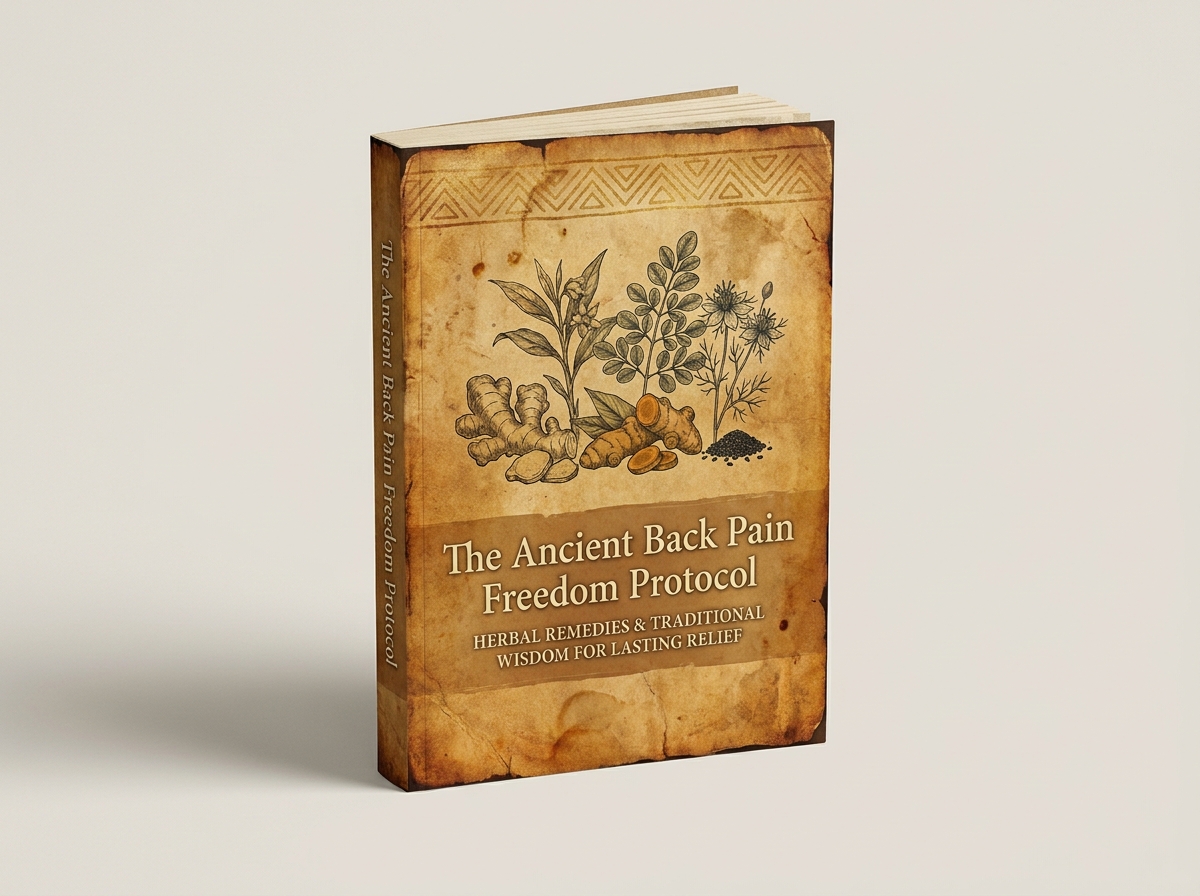
"The Ancient Herbal Ritual Quietly Passed Down by African Healers — That Helps Ease Chronic Back and Lumbar Pain From the Root Up, Without Painkillers, Physiotherapy Bills, or a Single Exercise Machine"
Everything Pa Erhirhie shared with me, documented completely in one guide you can follow at home.
Inside this guide, you'll discover:
✅ Why your back pain keeps returning even after painkillers, physiotherapy, and rest — and the one thing conventional medicine rarely addresses that Pa Erhirhie identified immediately (Page 4)
✅ The complete 21-day herbal protocol, step by step, ingredient by ingredient, with exact preparation methods you can do at home tonight (Page 9)
✅ The 8 specific herbs to source — available in any Nigerian market or UK African grocery store — with local names, what they look like, and exactly what each one does (Page 14)
✅ The anti-inflammatory food list: what to eat daily to support the herbal protocol from the inside — and the 6 common foods that actively worsen chronic spinal inflammation (Page 21)
✅ The #1 mistake chronic back pain sufferers make that undoes weeks of progress — most people do this without realising it (Page 18)
✅ Pa Erhirhie's maintenance protocol — what to do after the 21 days to keep the results and prevent relapse, even with a desk job (Page 27)
✅ The special protocol for long-term sufferers — those who have had chronic back pain for more than 3 years and need a deeper, extended approach (Page 31)
You do not need to travel anywhere or find any traditional healer. No equipment. No gym.
Every ingredient in this protocol is available in your local Nigerian market or African grocery store. Total cost of all the herbs? Less than ₦4,000.
Compare that to what most people spend:
This protocol costs less than one physiotherapy session.
What Went Into Building This Guide
- Two extended sessions with Pa Erhirhie documenting every detail of the protocol: time and travel cost ₦40,000
- Cross-referencing all herbs with documented research on anti-inflammatory and musculoskeletal properties: ₦35,000
- Testing with 12 individuals across different back pain types, ages, and locations over 8 weeks: ₦30,000
- Professional writing, editing, and design of the complete guide: ₦25,000
- Website and delivery setup: ₦10,000
Total investment: over ₦140,000
That does not include the three years of physiotherapy bills, hospital visits, and painkillers I spent before finding this. Or the cost of the moments I missed.
A fair price would be ₦20,000. But if you take action today…
This price is ONLY available to the first 20 people who access the guide today.
After that, the price returns to ₦20,000.
Once you click the button above, here's what happens:
- You are taken to a simple, secure payment page
- Complete your payment of ₦9,700
- Your complete guide plus both bonuses are delivered to your email and WhatsApp immediately upon payment confirmation
This is Emeka. Not a bot. Not an automated system. Your access is confirmed personally once payment is verified.
What People Are Saying After Using the Protocol
Real results from people who started exactly where you are now
I was completely sceptical. I have done physiotherapy twice, tried two different supplements, nothing ever lasted. By Day 8, I woke up and sat up in bed without using my hands to push myself up. I stood there for almost thirty seconds just processing it. The constant pain that followed me through every meeting, every workday, every morning — it has significantly reduced. I am not saying I am cured. I am saying the baseline has shifted in a way nothing else has achieved in three years of trying.
I drive 10 to 12 hours a day. My lumbar has been grinding me down for two years. The herbs cost me ₦2,800 total at the market — I was genuinely shocked. By Day 9, I noticed I was stepping out of the car at the end of a shift without doing the slow, braced exit I have been doing for two years. I just stood up. My wife watched me and asked what changed. I told her — something in this protocol is actually working. The constant pressure at the base of my spine has reduced. That is not placebo. That is real.
I will be completely honest — I was ready to dismiss this immediately. I have had lumbar pain for four years and nothing my colleagues prescribe has fixed it. I looked up the herbs listed before I started anything. Their documented properties are legitimate. I know what these plants do. Week two, the lumbar pain I have carried for four years had reduced in a way that two weeks of ibuprofen never achieved. I am documenting it carefully because I do not say things I cannot back up. I now recommend this protocol to patients with chronic musculoskeletal pain — alongside their medical care, not instead of it. This deserves to be widely known.
WAIT — Two Powerful Bonuses Are Included For Free Today
If you are one of the first 20 people to access this guide today, I am adding 2 bonuses at no extra cost:
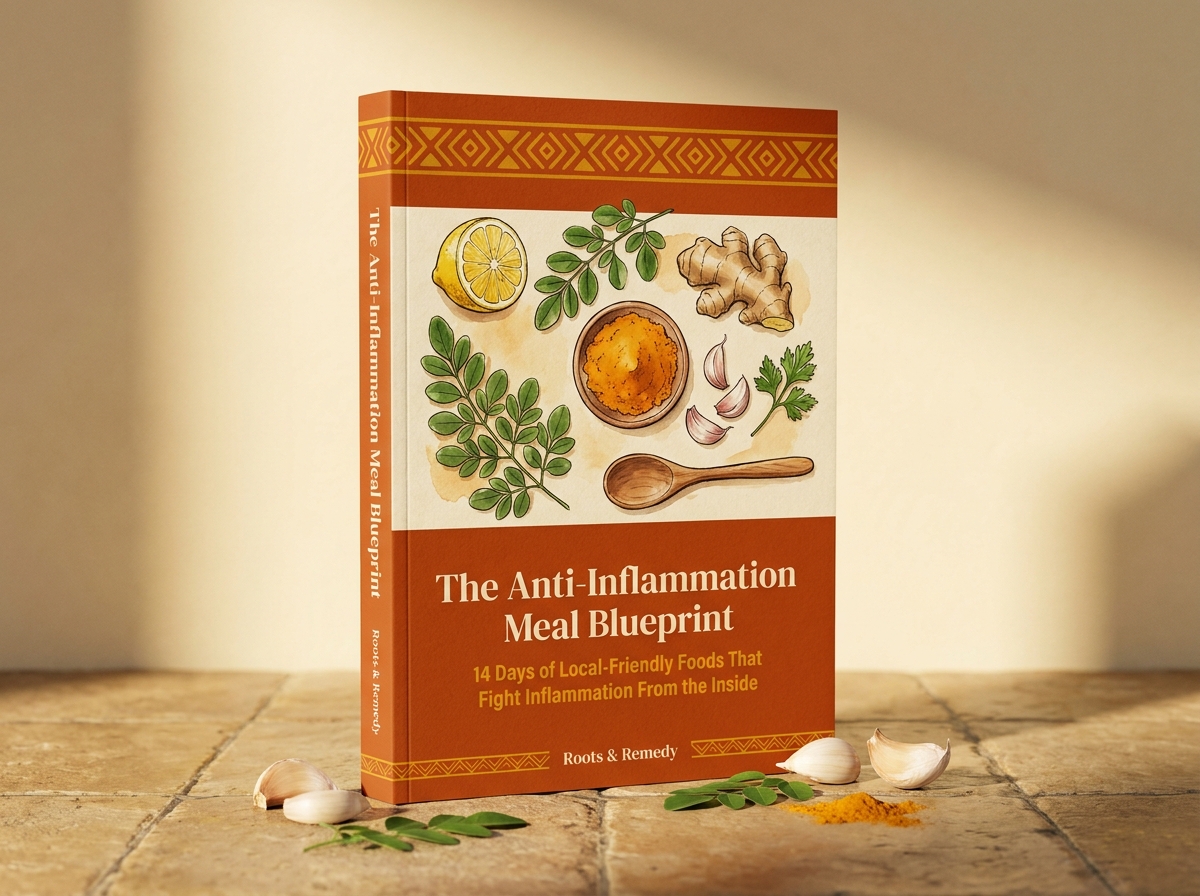
BONUS #1: The Anti-Inflammation Meal Blueprint
(Value: ₦6,000)
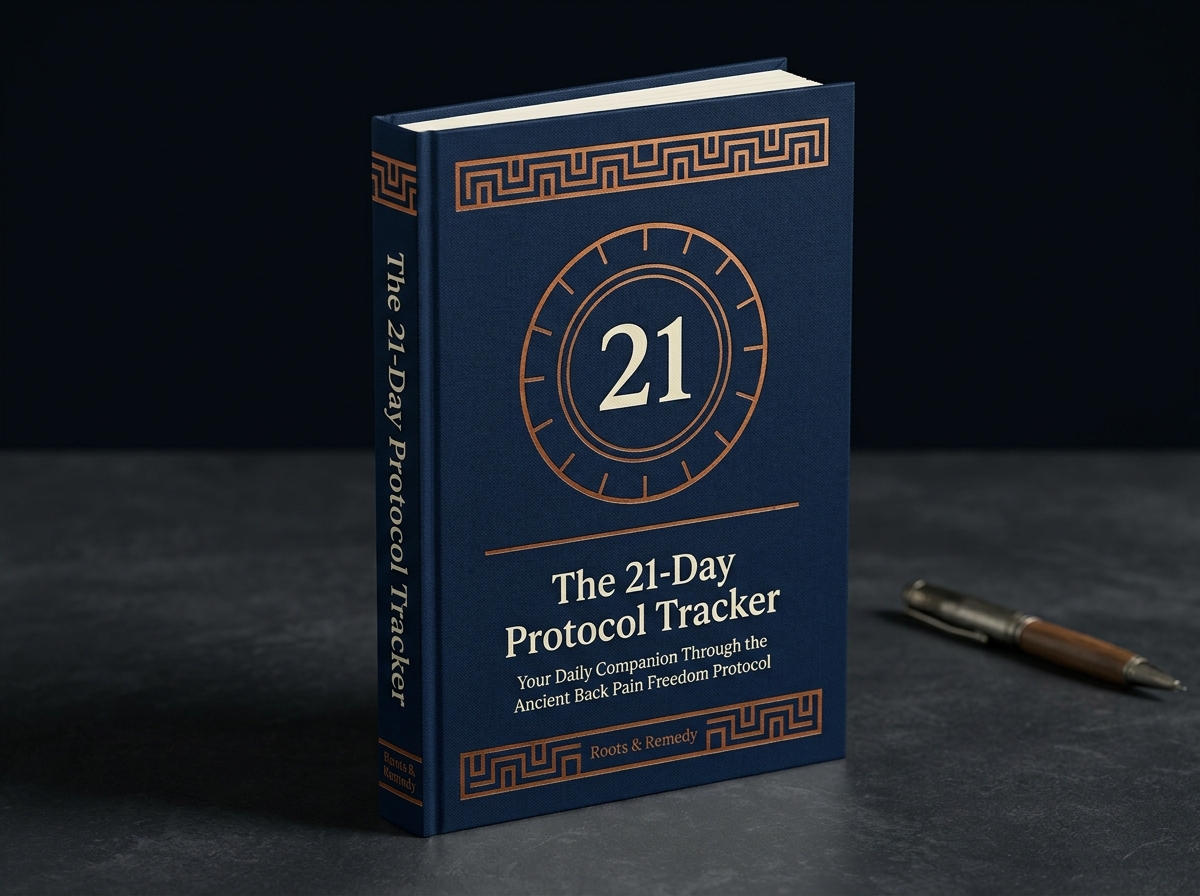
BONUS #2: The 21-Day Protocol Tracker
(Value: ₦4,000)
BONUS #1: The Anti-Inflammation Meal Blueprint (Value: ₦6,000)
A 14-day Nigerian-friendly meal guide showing exactly which foods actively support the herbal protocol — and which common foods silently worsen chronic spinal inflammation.
- 10 specific foods that support the body's natural anti-inflammatory response
- 6 foods to reduce immediately if you have chronic back or lumbar pain
- Simple, affordable 14-day meal structure using ingredients available in any Nigerian market
- Morning drink recipe that supports the protocol from Day 1
The herbs alone are powerful. Combined with the right food choices, the effect is significantly stronger.
Worth ₦6,000. Yours free today.
BONUS #2: The 21-Day Protocol Tracker (Value: ₦4,000)
A day-by-day tracking sheet so you never lose your place, never miss a step, and can see your progress building across the full 21 days.
- Daily checkboxes for the herbal protocol and food guidelines
- Simple pain observation scale to track your progress from Day 1
- Week-by-week milestone markers so you know exactly what to expect and when
Worth ₦4,000. Yours free today.
Everything You Are Getting Today
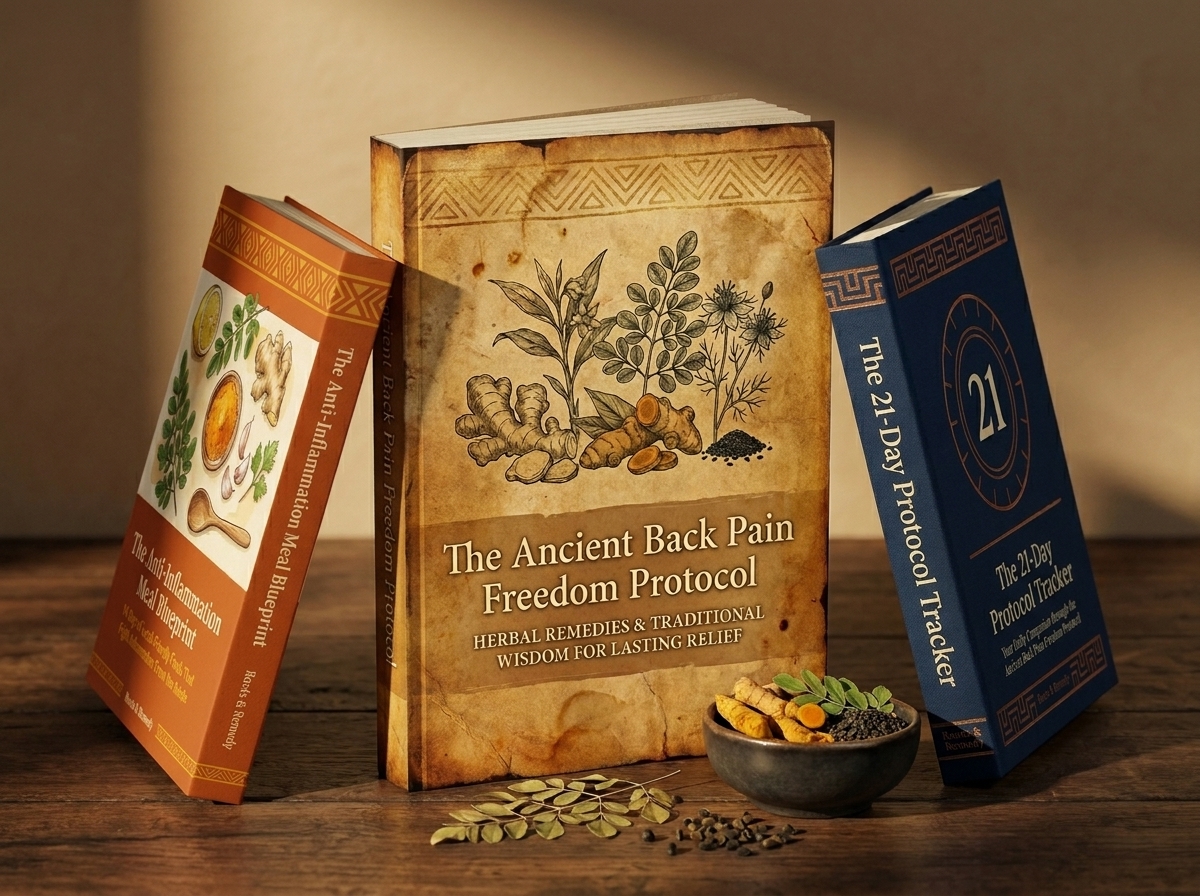
You are not the only person reading this right now. Others with the same back pain you have had for months — or years — are on this page at this moment.
My Full 30-Day Money-Back Commitment
Step 1: Access the guide today
Step 2: Note today's date
Step 3: Follow the protocol exactly for 21 days
If you do not feel a meaningful reduction in your back and lumbar discomfort… if nothing shifts in how you wake up, how you move, how you sit through your day…
Send me a WhatsApp message within 30 days and I will refund your full ₦9,700. No drama. No questions. No delay.
You have zero risk here. The only thing you are risking is another month of the same pain.
Right Now, You Have a Choice to Make
Continue reaching for ibuprofen every morning before the day even starts.
Continue adjusting your seat, your posture, your position — managing instead of resolving.
Continue telling your children "not today" when they need you present.
Continue spending money on physiotherapy that helps while you are there and stops the moment you are not.
Maybe it will get better on its own.
(It hasn't in three years. It won't in the next three.)
Imagine 14 days from now…
You sit up in bed in the morning without using your hands to push yourself up.
You sit through a four-hour meeting and stand up at the end feeling like a person.
Your child asks you to play. And you say yes — and mean it.
You go a full week without reaching for a painkiller. And then two weeks.
The pain that has followed you like a shadow for years starts to feel manageable. Then optional.
This is not a fantasy. It is what the protocol does. But only if you start.
Questions People Ask Before Getting the Protocol
One Last Thing Before You Decide
I want you to imagine something specific.
It is two weeks from today. Morning. Your alarm goes off.
You sit up.
No hands. No slow push. No bracing for the first wave of stiffness.
You just sit up. Like it is nothing.
Because for you — for the first time in however long this has been going on — it is nothing.
How would that morning feel?
What would it mean to go to work and not spend the first hour of your day managing pain that nobody else in the room can see?
What would it mean to say yes when your child asks you to play? To sit through a full meeting and stand up like a person at the end? To stop planning your movements around what your back will or will not tolerate?
That morning is possible. That version of your body is available to you. Pa Erhirhie's protocol is the path to it.
But only if you take the first step.
I will see you on the other side.
Your back remembers how to feel better. The protocol simply reminds it.
With respect,
Emeka 🌿
P.S. You have a full 30-day money-back guarantee. The only risk you carry is continuing to spend money on painkillers that suppress the pain while the underlying problem continues untreated.
P.P.S. The ₦9,700 price is only available to the first 20 people. Once those spots are gone, the price returns to ₦20,000. This is not a pressure tactic — it is how the early access pricing works.
P.P.P.S. Every day you wait is another morning of managing instead of resolving. Another day of adjusting and tolerating and planning around a body that should be working with you, not against you. The best time to start was three years ago. The next best time is today.
Roots & Remedy · Ancient Roots. Modern Relief. · rootsremedy.online
Disclaimer: This guide contains traditional herbal wellness information documented for educational and informational purposes. Individual results may vary. This protocol is not intended to diagnose, treat, cure, or prevent any medical condition and is not a substitute for professional medical advice. Always consult your healthcare provider before beginning any new health regimen, especially if you are pregnant, nursing, taking prescribed medication, or managing a diagnosed medical condition.